ChatGPT and the market race to improve LLMs and Generative AI
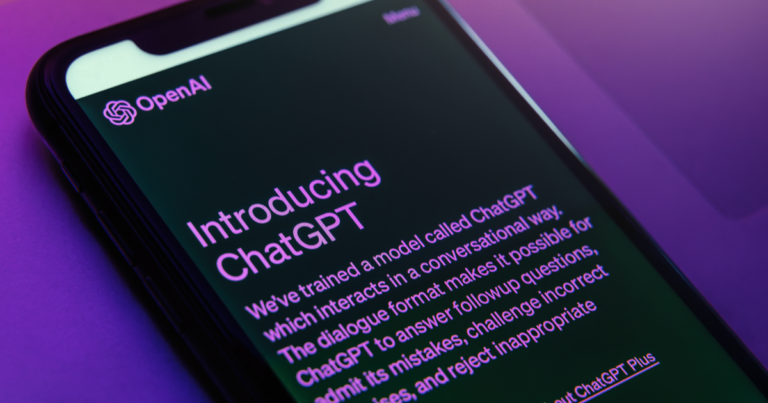
A phenomenon that has exploded in popular appeal and is easily the most talked-about subject in the technology world today, Generative AI has gained ground and drawn in the curious. All that attention has also pushed other giants to move as fast as they possibly can — Adobe, with the launch of Express and Firefly, new Artificial Intelligence-based applications for graphic design in the cloud, or Google, with Gemini, its AI chatbot, similar to the tool from OpenAI, which is now integrated into Microsoft's Bing.
Behind this entire universe there is one expression: Generative AI. Artificial Intelligence capable of creating new texts, images or even algorithms, – such as GitHub Copilot, a kind of plugin able to analyze, complete or even write source code, a tool that has also already been integrated with ChatGPT – Generative AI feeds on the information users are able to provide, together with the vast databases used in its training, creating an enormous chain of cooperation in order to then generate content. Even so, it is important to remember that these are still tools in a testing phase, whose main support for enriching and refining the platforms comes from the thousands of people who use them every day, whether for serious research or out of sheer curiosity.
Both Generative AI and LLMs (Large Language Model) are ways of using Artificial Intelligence to create text, images and much more. When we talk about LLMs, we are referring to the AI and deep learning structure that uses a gigantic base of data in different formats and, through training, draws on that base to build answers and information — as ChatGPT does, calculating the “most likely next word” in order to construct a line of logical reasoning, all based on statistics. LLMs use gigantic text bases and a large number of parameters.
For those who have been around the virtual world longer, what Akinator, the web genie, is able to do may well be a great mystery. Through questions and answers, it manages to work out who you were thinking of, from a major celebrity to even the challenger's own mother or father. This is a fine and simple example of machine learning, a concept already widely known by the general public. We can think of an LLM as a “gigantic Akinator” that goes far beyond characters or people.
However, all this refinement and evolution of information sits inside a universe that is still very new, one that people are discovering little by little – and colliding with its consequences. In recent days, photos also circulated on the Internet showing former US president Donald Trump being arrested by the police, and even a modern Pope Francis wearing an enormous puffer jacket along with a large crucifix, in the finest rapper style. Both images impressed people… but they are nothing more than AI creations.
And this whole new world of technologies also raises a series of questions, especially when the subject is intellectual property. So, will ChatGPT be capable of producing complete academic papers, journalistic texts or other content that requires human reasoning and creativity? The answer is no. However advanced they may be, tools like ChatGPT learn from a vast pool of information that is often disconnected, out of context or even plain wrong. They are far more “reproductive” than genuinely “generative”, since they generate content grounded in that database.
And what about jobs — will they be lost? Well, it is well known that, ever since the Industrial Revolution, technology has been replacing human labor. Today we no longer have switchboard operators standing by to transfer a call, or lamplighters, who switched on the street lighting at the end of the afternoon and switched it off with the arrival of a new day, for example. Today we have self-service, on public transport or in supermarkets, which likewise calls a number of occupations into question, such as bus fare collectors (or conductors) and checkout operators, among others. Jobs will not be replaced from one moment to the next. The labor market will have time to adapt to the new professions that will emerge, especially within the technology universe, such as developers of LLMs and Generative AI themselves.
According to Gartner, by 2025 this branch of AI will be used in 50% of drug discovery and development initiatives, which could represent a spectacular gain for healthcare and, looking further ahead, by 2027, 30% of manufacturers will use the technology to improve the effectiveness of product development.
It is important to view all these advances with a critical but positive eye. This is modernity happening, with simple, programmatic tasks giving way to productivity gains and to the concentration of effort in other areas. Technology may seem to be moving too fast, but over the past few centuries humankind has shown that it is indeed capable of adapting to it.

Por Matheus Barreto
Innovation Director at TriggoLabs
We stay ahead of transformation
As a technology and innovation company that keeps a constant eye on new trends, TriggoLabs is currently mapping ways to integrate LLMs and Generative AI into its operations, with the goal of increasing productivity, reducing operational effort and delivering even more complete results to clients.